
Candied Buddha’s Hand Peel
 14 Comments
Tweet
After I made my Buddha’s Hand Citron Liqueur, I decided to candy the “fingers”.
To make candied citrus peels you need:
- Citrus fruit (lemon, orange, Buddha’s hand, etc.) peeled, pith removed and peel sliced
- 1 1/2 cups of super fine sugar
- 1 cup water
First I sliced each Buddha’s finger in half:
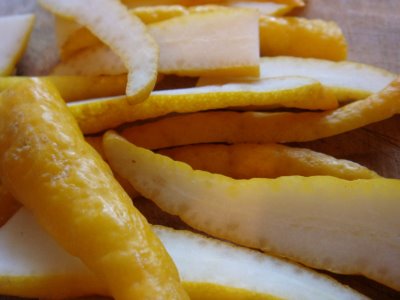 Then I sliced each half into little crescents:
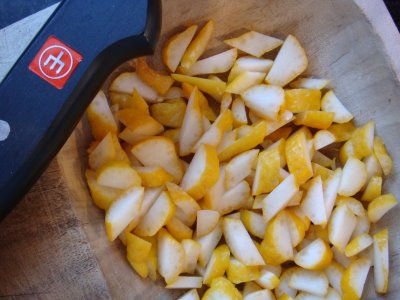 I put these slices into a pot of boiling water for about 10 minutes to let the bitterness of the peel wash away a bit (this was a suggestion I found online). The smell of the boiling water was amazing. If I were to make this recipe again, I would skip this step. The Buddha’s Hand peel isn’t very bitter at all and I believe that the flavor lost to the boiling water would have added a nice lemony scent to the sugar coating.
Next, I mixed a 1:1 ratio of superfine sugar to water in a heavy pot — use a volume that matches the amount of peel you have. I chose 1 cup to 1 cup — but this was probably a little too much. You simmer the sugar water over a medium flame and stir until the sugar dissolves completely.
 Line a baking sheet with foil and pour in the remaining 1/2 cup of superfine sugar. This will be used to dust the candy when it’s done.
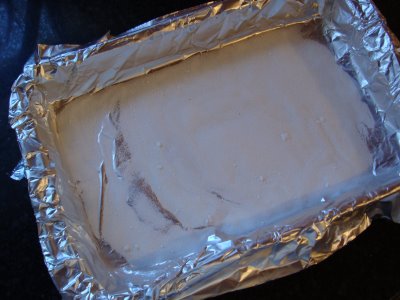 Once the sugar is completely dissolved, and the simple syrup has begun to boil, add the citrus peels. Return to a boil and adjust the heat to keep a moderate boil. Be sure to watch and stir the pot as needed. When the volume of the syrup starts to diminish, you will need to stir more often.
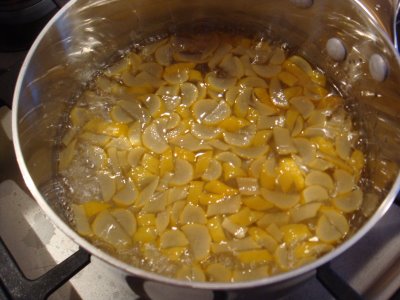 Let the pot boil until the mixture reaches a temperature of 230°F, which will take 1 to 2 hours. If you have never worked with melted sugar before… be warned! As the temperature rises and the volume decreases, the syrup becomes very thick and sticky. Make sure you really stir at this point to avoid burning. You may need to also turn down the heat a bit.
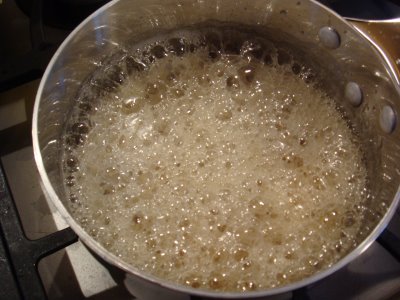 When you mixture is at 230, turn off the heat, carefully remove the candied peels and drop them onto the lined baking sheet. This step is a total pain in the butt. The peels stick together, the syrup is super thick and it’s hard to figure out how to do it without making a mess. Don’t worry… as you mix the peels into the sugar coating it’s easier to break them apart.
I used a set of “fingered tongs” to remove the bits and then once I had them in the sugar bath, I broke up the pieces and mixed them around using this whisk. It seemed to work well. The mixture hardens fast (note how the whisk is covered in sugar)… so move quickly!
 The final product was sweet, lemony and chewy. I think I will chop them up and add them to salads or just eat them right out of the jar. They are on the hard side… and I am not sure if this is “normal” of if I messed something up.
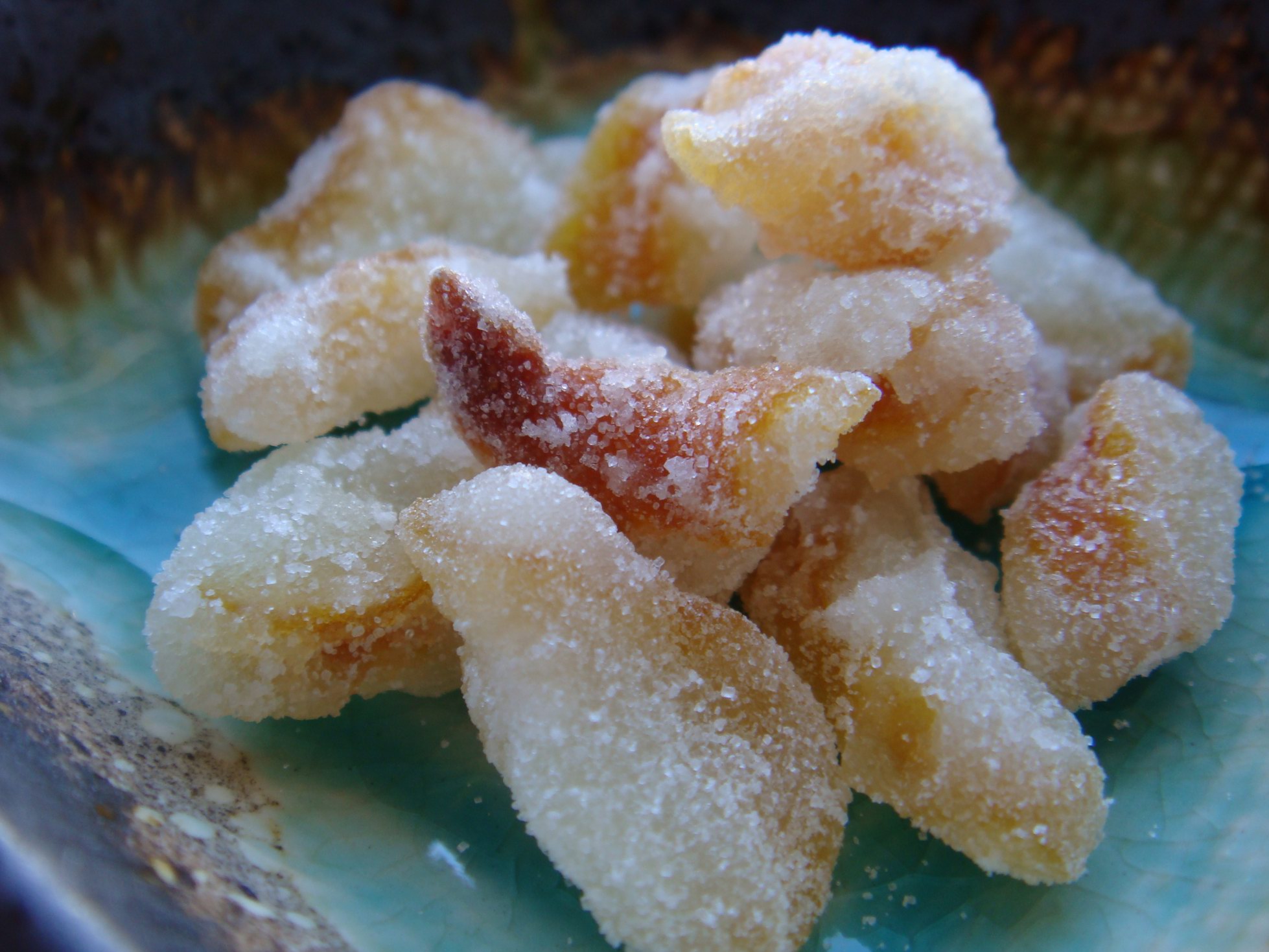
The downside to the whole process? The rock-hard coating of candy that was on all the utensils and covering the entire inside of my pot. I thought it would really suck trying to get this stuff cleaned up… but I ran everything under really hot water and all the sugar melted. Not so bad at all!
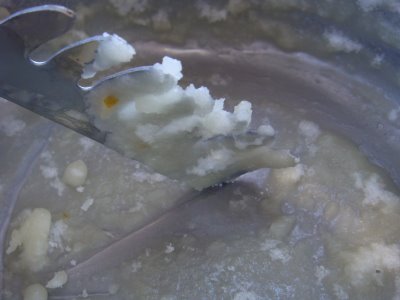
When all done, I poured the remaining clumps of sugar (from the baking sheet) into a coffee grinder and ground it up. Now I have a lemony, caramel-tasting, super fine sugar for dusting. Waste not, want not!

 (6 votes, average: 4.00 out of 5)
 Loading...